


Ocean Bank Mobile Banking
4.7189.00 Reviews
App Specs
- Version
- 25.2.4
- Updated On
- License
- Free
- Downloads
- 100,000+
- Developer
- Ocean Bank
- Categories
- Finance
- Platform
- Android
Screenshots
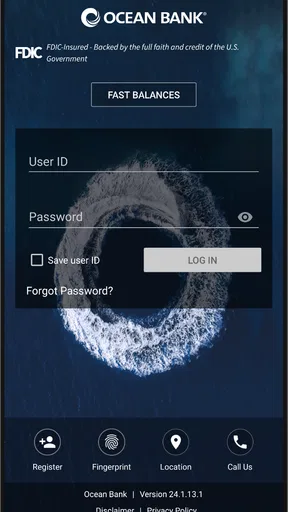
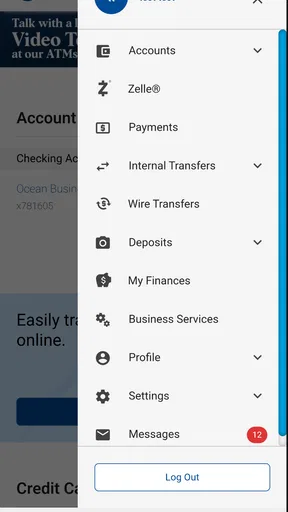
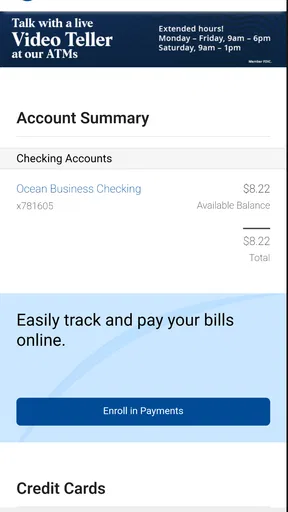
 Analysis by AppCompare
Managing a household account from a phone sounds simple until several people need information at the same time. One person may be checking whether a payment has cleared, another may be waiting to confirm available money before shopping, and someone else may only need a quick look at recent activity. My experience with Ocean Bank Mobile Banking is that it is most useful when it keeps those everyday banking moments close at hand without turning them into a trip to a branch or a desktop computer.
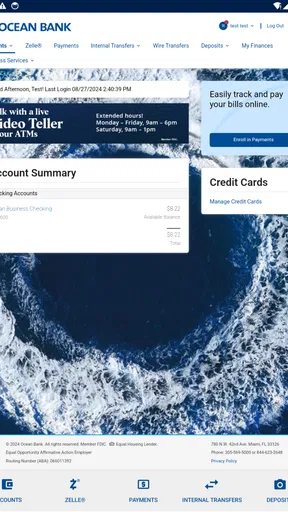
This is a free finance app from Ocean Bank, designed for banking while away from a computer. It is rated for Everyone, has passed the 100K-plus install mark, and currently appears as version 25.2.4 for devices running iOS 11 or later. Those details make it approachable for a broad range of users, although the practical experience still depends on whether your phone is supported and whether you are comfortable handling private financial information on a mobile device.
I would not describe it as an all-purpose household finance planner. Its value is narrower and more practical: it gives Ocean Bank customers a mobile place to handle routine banking checks and decisions. That focus is a strength for someone who wants quick access, but it also means people looking for detailed budgeting, shared expense planning, or a complete view of accounts at several institutions may prefer a separate tool.
How Ocean Bank Mobile Banking fits into shared household use
I find shared household use works best when the app supports a specific decision rather than becoming a screen everyone checks. Agreeing in advance on who handles account access and what information needs to be relayed can prevent confusion during routine errands, while keeping private account details in the account holder’s hands. That boundary also makes it easier to decide what a household planning tool still needs to do.
A realistic moment at home
Imagine a couple preparing for a busy weekend. One person is at the supermarket and wants to verify that a recent deposit is reflected before paying. The other is at home, trying to match a recent purchase against the household spending plan. With a mobile banking app, both people can make decisions from where they are rather than waiting until they reach a laptop. That is the kind of convenience I noticed most: not dramatic financial management, but fewer small interruptions during an ordinary day.
The app is especially sensible for the account holder who handles frequent checking. A quick glance before a purchase can prevent an avoidable surprise, while checking after a transaction can make it easier to keep personal records current. I also found the mobile format better suited to short visits than to long sessions. When I want a snapshot of what is happening, a phone is more convenient than opening a browser, finding a bookmark, and signing in on a larger device.
There is an important boundary in a shared household, though. Convenience does not mean that several people should casually use one person’s signed-in banking session. A phone left unlocked on a kitchen counter is not a neutral household screen; it may expose sensitive financial information. I would treat the app as a personal banking tool that can support household coordination, not as a communal dashboard.
Worth Reading Before You Choose

EA SPORTS FC Mobile 26 Is a Bigger Football Game, but It Takes Time

Flipboard Shows What News Apps Must Do Beyond the Feed

Switching to Android Auto Means Rethinking Your Driving Routine

Google Calendar Makes a Crowded Week Easier to Manage

Ludo King Makes the Most of the Minutes Between Plans

Baby Panda World Brings Quick Play to Modern Phones, but Its Game Library Feels Busy
Where shared use becomes less comfortable
The app works best when each person understands whose account access they are using. If one partner manages the account while another only needs confirmation that a payment went through, the safest routine is to share the necessary result verbally rather than hand over an already authenticated phone. That may feel slower, but it preserves a clear line between cooperation and unrestricted access.
This distinction matters even more when a household includes roommates, older relatives, or temporary guests. A shared device can blur expectations: someone may think a banking app is just another household utility, while the account holder sees it as a private financial record. I would avoid installing or leaving the app available on a device that multiple people use unless the device itself is protected and everyone understands that access belongs to the account holder.
For a family coordinating regular expenses, Ocean Bank Mobile Banking can reduce the need for repeated status questions, but it does not replace an agreed household system. A simple shared note or conversation can still be useful for deciding who pays a bill, while the app serves as the place to verify the account side of that decision. Keeping those roles separate prevents the banking app from becoming an improvised family ledger.
Setting it up without crossing account boundaries
My advice is to begin with the smallest setup that solves the immediate need. Install the app on the primary account holder’s own phone, sign in carefully, and confirm that the account shown is the one you expect before relying on it for a payment decision. This sounds obvious, but it is a valuable habit when a person has more than one Ocean Bank relationship or is helping another family member with their phone.
Do not treat installation as permission to combine everyone’s finances. A household may share rent, groceries, or subscriptions while still maintaining separate accounts. The app should not be used to erase those boundaries. If two people have different accounts, each person should remain responsible for understanding which account they are viewing and which transactions belong to them.
I also recommend deciding in advance who is allowed to perform actions and who only needs information. Someone may need to check activity but should not be expected to make account changes. Another person may be the one who handles banking tasks. Establishing that distinction before an urgent situation is much easier than negotiating it while standing in a store or trying to resolve a late payment.
Because this is financial software, the phone itself becomes part of the security routine. Use the device’s normal lock protection, avoid leaving the app open when you walk away, and be cautious when using a phone that is borrowed or shared. I would also avoid discussing account details aloud in public simply because the app makes them easy to access. Mobile convenience is useful only when it is paired with ordinary privacy discipline.
Coordinating money without turning the app into a group chat
One of the more useful ways to use the app in a household is as a confirmation point. For example, one person can make a deposit or payment, then check the account later and tell the other person that the expected activity is visible. That reduces uncertainty without requiring both people to log in or inspect the same screen.
Another practical workflow is to use the app at two specific moments: before a larger household purchase and after the purchase has had time to appear in the account activity. The first check helps with available-funds decisions; the second helps reconcile the purchase with a receipt or household note. I prefer this deliberate rhythm to repeatedly opening the app throughout the day, which can encourage anxiety without adding useful information.
For couples with separate spending responsibilities, the app can support a “check, then communicate” habit. One person verifies their own account, reports only the amount or status needed for the shared decision, and keeps the rest private. That approach is more respectful than passing a phone around and more reliable than assuming a payment has completed just because it was initiated.
There is a trade-off here. A dedicated budgeting app may be better for assigning categories, tracking contributions, or comparing spending across several banks. Ocean Bank Mobile Banking is more appropriate when the question is directly connected to an Ocean Bank account and needs a current account view. I would use the banking app as the source for account reality and another method for household planning if the family needs detailed collaboration.
What the ratings suggest, and what they do not prove
The app holds a 4.7 average from around 577 ratings, with roughly 189 written reviews. That is a reassuring sign that many users find the experience worthwhile, and the 100K-plus install count shows that it has reached a substantial audience. I see those figures as evidence of a generally positive reception, not as a guarantee that every household will find it equally comfortable.
Banking apps are judged by personal circumstances. A customer who only needs quick mobile access may be delighted, while someone expecting advanced financial planning may find the scope too limited. A person who is already comfortable with phone security may appreciate the convenience immediately; someone who dislikes handling financial tasks on a mobile device may prefer a browser or in-person support.
The age rating of Everyone makes the app broadly accessible in store terms, but that should not be confused with automatic suitability for every young person. Financial responsibility is a separate question. I would not hand a child unrestricted access simply because the app is available to a general audience. Parents or guardians should decide what information a young user may see and what banking responsibilities are appropriate, while keeping the account holder’s boundaries clear.
Trust is equally important between adults. If a partner or relative helps with banking, the arrangement should be explicit rather than based on a casually shared passcode or an unlocked device. The app can make assistance easier, but it cannot decide whether that assistance is appropriate. In my view, the best household setup is one where everyone knows who owns the account, who performs tasks, and who receives only the information needed for coordination.
Everyday strengths that matter more than flashy extras
The strongest quality here is immediacy. A mobile banking app earns its place when it shortens the distance between a financial question and a useful answer. For an Ocean Bank customer, that can mean checking an account while commuting, confirming activity before making a household purchase, or handling a routine check without waiting for access to a computer.
The free price also lowers the barrier to trying it. There is no separate purchase decision standing between an Ocean Bank customer and mobile access, which makes it reasonable to test the app as part of a normal banking routine. I would still judge it by whether it saves time and reduces uncertainty, rather than installing it simply because it costs nothing.
Its long presence in the mobile banking space is another practical point. The app was released on September 20, 2015, and the current version is 25.2.4. I would not use age alone as proof of quality, but a product that has continued through multiple versions is easier for me to take seriously than a newly appearing banking utility with no established history.
Ocean Bank is also a clear point of focus. If all of your relevant banking activity is with this developer, keeping the account check in a dedicated app can feel cleaner than using a general-purpose financial aggregator. You are not asking another service to become the central place for a relationship that already belongs to Ocean Bank.
Limitations I would consider before relying on it
The first limitation is scope. This is a bank-specific mobile app, not a household budgeting workspace. If your main goal is to combine accounts from different institutions, split bills with roommates, build long-term spending reports, or coordinate detailed family goals, you will probably need another solution alongside it.
The second is the risk of over-sharing on a shared device. The app’s usefulness can tempt families to leave it signed in or pass the phone around. That is not a weakness unique to this product, but it is a real friction point in household use. I would rather accept a little extra coordination than make private account information casually available to every person who uses the device.
The third is that mobile access can create false confidence. Seeing an account screen is helpful, but it does not remove the need to read transaction details carefully, distinguish pending activity from completed activity when applicable, or keep receipts for household reconciliation. I would use the app to inform decisions, not as a substitute for reviewing important financial records.
There is also a compatibility consideration. The listed minimum operating system is iOS 11, so anyone using an older device should check compatibility before planning around the app. Even on a supported phone, I would keep the operating system and the app current when updates are available through the normal device process. That is a sensible maintenance habit for any application that handles financial information.
Who should use it, and who should choose something else
I think Ocean Bank Mobile Banking is a good fit for an Ocean Bank customer who wants a straightforward way to check banking information while away from a computer. It is particularly useful for people who make frequent everyday decisions, such as confirming whether money is available before a purchase or checking whether recent activity matches expectations.
It also suits a household where one person handles the account but needs to coordinate with another. The best arrangement is not full shared access; it is a clear division of responsibilities. One person uses the app privately, then communicates the limited information needed for a joint decision. That keeps the app useful without pretending that household cooperation requires identical account access.
I would look elsewhere, or use an additional service, if your priority is collaborative budgeting. The same is true if you want a single screen for multiple banks, automatic household categorization, or a detailed record of who owes what. A bank’s own mobile app has an advantage for direct account access, but a dedicated financial planning tool may be stronger for analysis and group organization.
I would also hesitate to recommend it as a child’s first independent money-management environment without adult supervision. The general age rating makes it broadly available, but availability is not the same as financial readiness. For teenagers or younger users, a parent should establish clear rules about device access, account visibility, and what actions are allowed.
My household verdict
After using Ocean Bank Mobile Banking as a practical account companion, I see it as a focused tool rather than a complete solution for family finances. Its free access, broad Everyone rating, strong 4.7 average, and established install base make it an appealing option for Ocean Bank customers who want banking on a phone. The most convincing benefit is simple: it helps turn a question about an account into a quick personal check.
My recommendation comes with one condition: keep the account boundary visible. Install it on the account holder’s protected device, decide who is responsible for each task, and use conversations or a separate planning method for the household parts of money management. That approach gives the app a clear job and avoids expecting it to provide family controls or collaborative features that are not central to its purpose.
For the right user, that focused role is enough. If I banked with Ocean Bank and regularly needed to check activity while moving through the day, I would keep it available. If I needed multi-bank budgeting or a shared expense ledger, I would pair it with a more specialized option instead of expecting one banking app to handle every part of household coordination.
My final view: Ocean Bank Mobile Banking is worth considering when your priority is convenient, direct mobile access to an Ocean Bank relationship. It is less suitable as a shared family finance hub, but with sensible privacy habits and clearly agreed responsibilities, it can make ordinary household banking noticeably easier.
Pros
- Quick access to balances
- transactions
- and account details
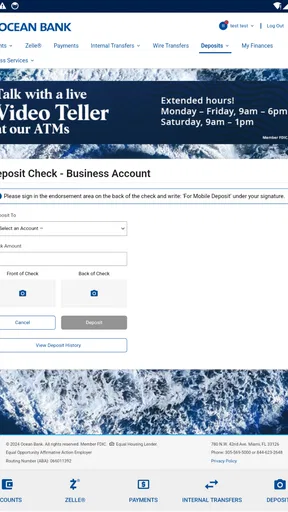
- Mobile check deposit saves a trip to a branch
- Bill pay helps manage recurring payments from one place
- Card controls can improve security when a card is misplaced
- Secure login options make everyday access more convenient
Cons
- Some features may require an eligible Ocean Bank account
- Mobile deposit limits can restrict larger check deposits
- App performance may depend on your internet connection
- Advanced banking services may still require branch assistance
- Notifications and alerts may need manual setup
FAQs for Ocean Bank Mobile Banking
What is Ocean Bank Mobile Banking, and what can I do with it?
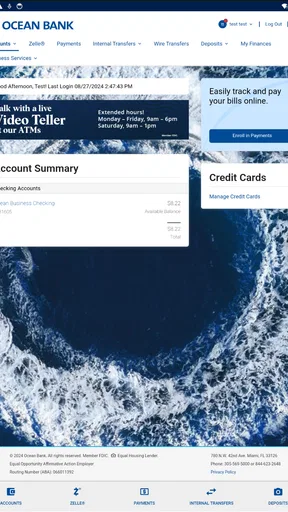
Ocean Bank Mobile Banking is the official banking app for managing eligible Ocean Bank accounts from an Android or iOS device. After signing in, customers can typically review balances and transaction history, transfer money between accounts, pay bills, deposit eligible checks, locate branches or ATMs, and receive account alerts. Available features may depend on your account type, enrollment status, device, and the bank’s current service availability.
Is Ocean Bank Mobile Banking safe to use?
The app is designed with standard banking security measures, including secure sign-in, encrypted communication, session timeouts, and additional verification features where required. However, no mobile service is completely risk-free. Download the application only from an official app store, keep your phone and operating system updated, avoid public Wi-Fi for sensitive transactions, enable device security, and contact Ocean Bank immediately if you notice suspicious activity or lose your device.
How do I sign in or enroll in Ocean Bank Mobile Banking?
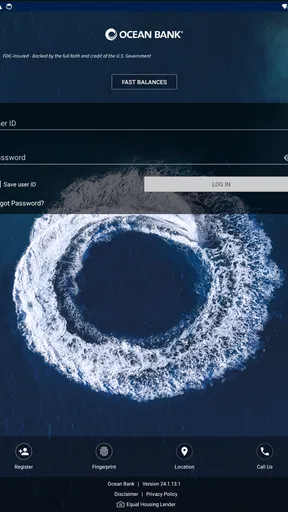
Existing Ocean Bank customers generally need an eligible account and online banking credentials to sign in. New users may be able to enroll through the app or the bank’s official website by providing requested identifying and account information. The exact process can vary, and some customers may need to contact the bank or visit a branch. Never share one-time verification codes or passwords with anyone claiming to provide support.
Can I deposit checks and transfer money through the app?
Depending on your account and eligibility, Ocean Bank Mobile Banking may support mobile check deposit and transfers between linked Ocean Bank accounts. Check deposits normally require photographing both sides of the endorsed check and following the app’s instructions, while transfers may require enrolled accounts or additional verification. Review limits, processing times, holds, and confirmation messages carefully, since funds may not be available immediately.
What should I do if the app does not work or I forget my password?
First, confirm that your internet connection is stable and that Ocean Bank Mobile Banking is updated through the official app store. Restarting the app or device may resolve temporary problems, but avoid repeatedly entering incorrect credentials because your access could be locked. Use the official password-recovery option or contact Ocean Bank through a verified phone number or website. Do not rely on unofficial links, messages, or third-party support accounts.


